
Installation guide
Home generator installation in Southern Utah
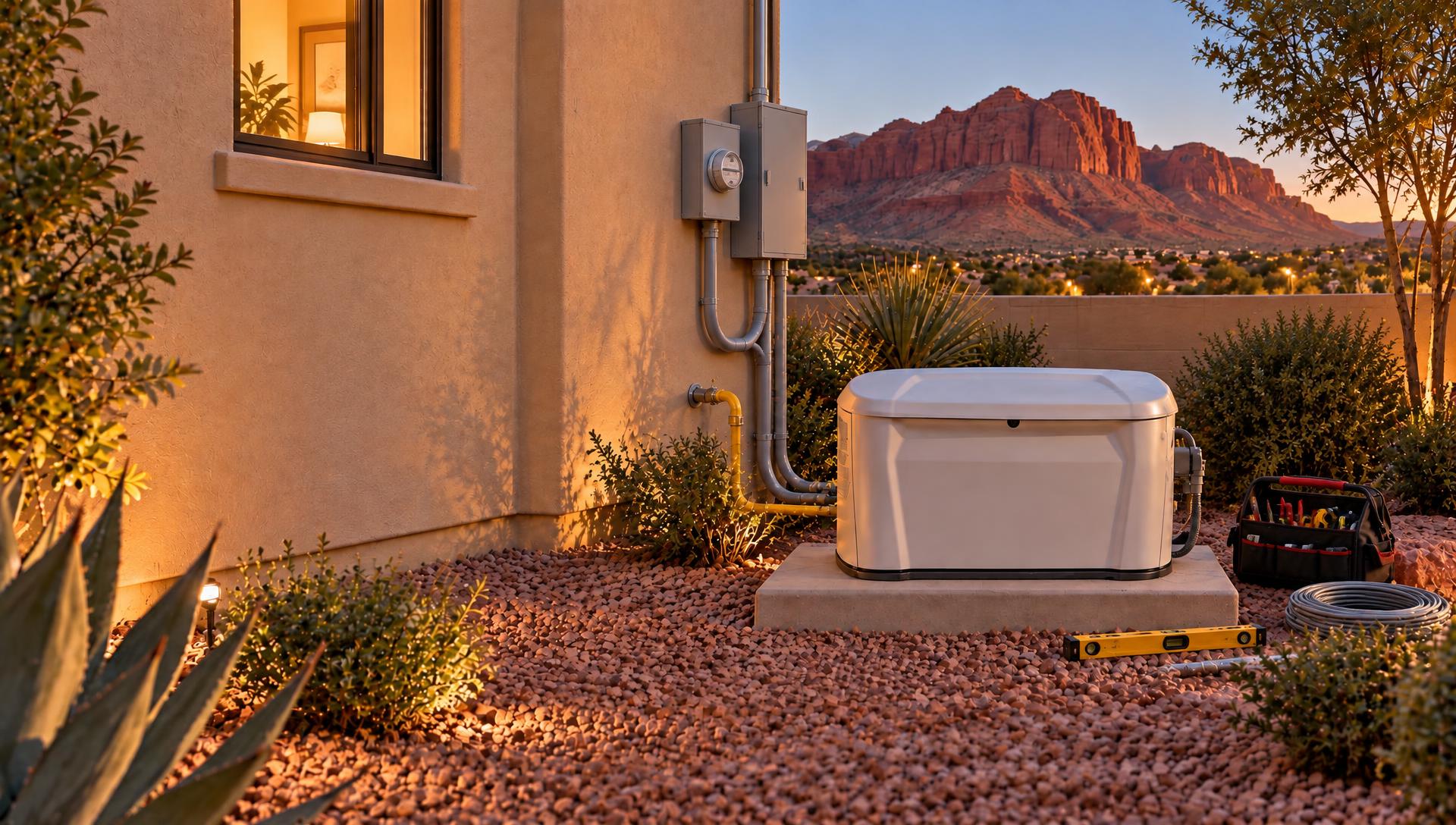
A standby generator isn't just set next to the house. It becomes part of your electrical system, and the quality of that connection has a lot to do with how it performs years from now. Here's how a typical install comes together.
St. George, Utah & surrounding communities
Planned before it's built
Sizing and placement come first
Permitted work
Electrical and fuel inspections
Licensed electrician
Rusty Lee, Citywide Electric LLC
The process
Six steps from first call to startup
Every home is a little different, but most installs follow this path. Step two leans on our sizing guide.
- 01
Consultation
A conversation about the home, the electrical system, the fuel source and what you want backup power to do.
- 02
Load assessment
A look at what you want powered and how much demand those loads put on a generator.
- 03
System selection
Generator size, transfer equipment, fuel and whether load management makes sense.
- 04
Site planning
Where the unit can sit, with clearances, access, fuel routing and the run back to the panel worked out.
- 05
Installation
Pad, generator, transfer switch, wiring and fuel connection, with permits and inspection.
- 06
Startup and walkthrough
The system gets tested, and you get a walkthrough of how it works and what to watch for.
Scope
What an installation usually includes
The details change with the equipment and the property, but most residential standby installs touch each of these.
- Generator placement and setting
- Automatic transfer switch
- Wiring between generator, switch and service
- Fuel supply connection and shutoff
- Concrete pad or approved base
- Disconnects where required
- Grounding and bonding
- Utility coordination when needed
- Permits and inspection
- Startup, testing and walkthrough
Site planning
Where the generator goes
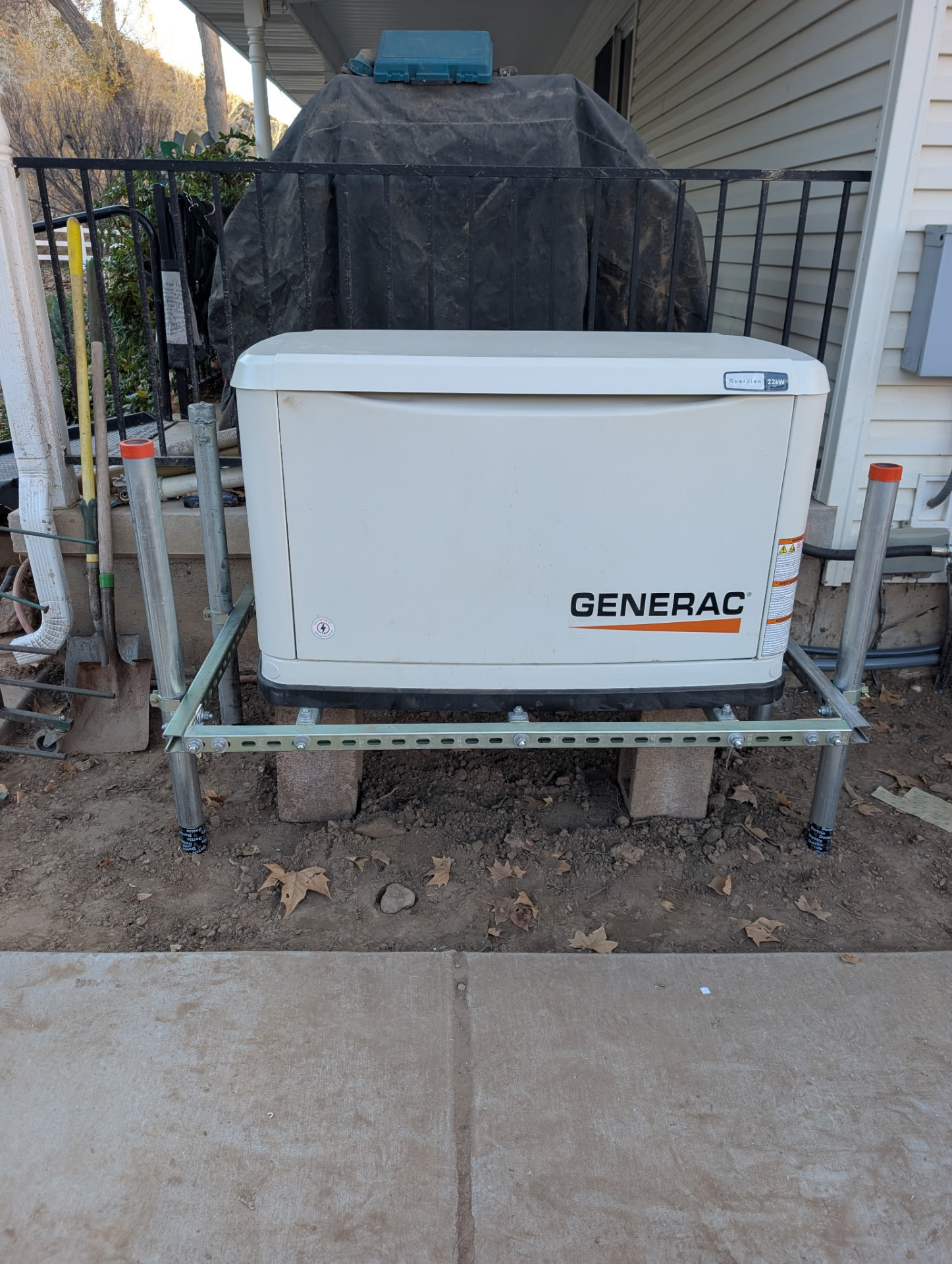
Placement is a design choice, not just whatever spot is open. The manufacturer's manual lists minimum clearances from the house, from windows, doors and vents, and from anything combustible. Local rules apply on top of that.
Past the minimums, a good plan looks at the distance to the meter and panel, how the gas line will run, whether a technician can reach every side, where exhaust will blow relative to patios and bedrooms, and how it looks from the street.
On Southern Utah lots, afternoon sun, blowing dust, drainage and HOA sightlines come up a lot. Fuel routing ties into your natural gas or propane choice.
Electrical work
The electrical side of the job
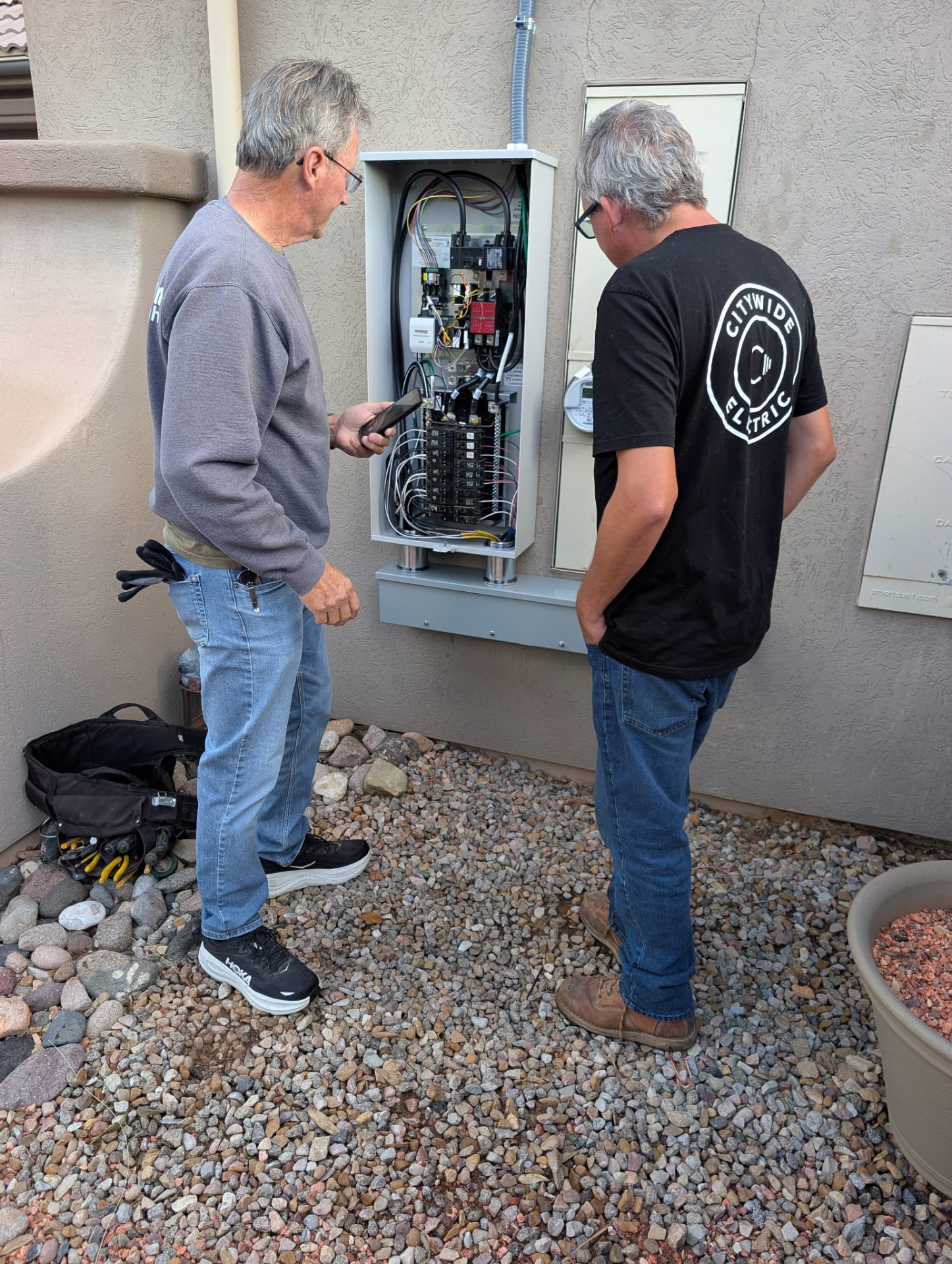
The transfer switch usually goes at or near the service so the house can move cleanly between utility and generator power. Depending on the setup, that can mean work at the meter, a service disconnect, panel changes or a new subpanel for managed loads.
Wire size, conduit routing, overcurrent protection, grounding and bonding all depend on the equipment and the site. This is the part of the job where experience tends to show up years later. Learn more about transfer switches.
Permits
Permits and inspection
Permit and inspection rules vary by city and county, and they usually cover both the electrical and the fuel work. What applies in Washington County isn't always the same as Iron or Kane County.
The installer typically confirms what applies with the local building department and handles it as part of the project. Permits and site conditions also factor into project cost, and our service areas page lists the communities covered.
Questions
Generator installation questions
How long does a home generator installation take?
The on site work for many residential installs takes a day or two. Permits, equipment availability, gas work and inspection scheduling usually add to the overall timeline, so it's best to plan for several weeks from consultation to startup.
Do I need a permit to install a standby generator in Southern Utah?
In most cases, yes. Electrical and fuel work are usually permitted and inspected, and the requirements vary by city and county. The installer typically confirms what applies and handles it as part of the job.
Where should a home generator be placed?
Outside, on a pad, at the clearances listed in the manufacturer's manual from walls, windows, doors and vents. Distance to the meter and gas, service access, exhaust direction, drainage and HOA rules all play a part too.
Who installs the generators referred through this site?
Rusty Lee of Citywide Electric LLC, a Utah licensed electrical contractor. Southern Utah Generators is an independent information and referral site, and our how this site works page explains the relationship.
What happens on startup day?
The system is tested, transfer operation is checked, and you get a walkthrough of the controller, the exercise cycle and basic upkeep.
More answers on our generator FAQ page, or see how this site works.
Keep reading
Related generator guides
- Generator sizingThe load evaluation that comes before installation.
- Transfer switchesThe equipment that connects the generator to your home.
- Generator costHow site conditions shape the total project cost.
- Natural gas vs propaneFuel work is part of nearly every install.
- Service areasCommunities across Southern Utah.
- Generator maintenanceWhat ownership looks like after startup.
Next step
Ready to plan your installation?
Rusty Lee of Citywide Electric LLC, a Utah licensed electrical contractor, can look at your home, your panel and your fuel, then walk you through what the install would involve. Learn more about Rusty.
This page is general information, not a design, quote or code ruling. Installation requirements, clearances, permits and timelines vary by equipment, property and jurisdiction. Follow the manufacturer's instructions and confirm details with a licensed electrician and your local building department. Southern Utah Generators is an independent referral site; installation work is performed by Citywide Electric LLC. Generac is a trademark of its respective owner.