
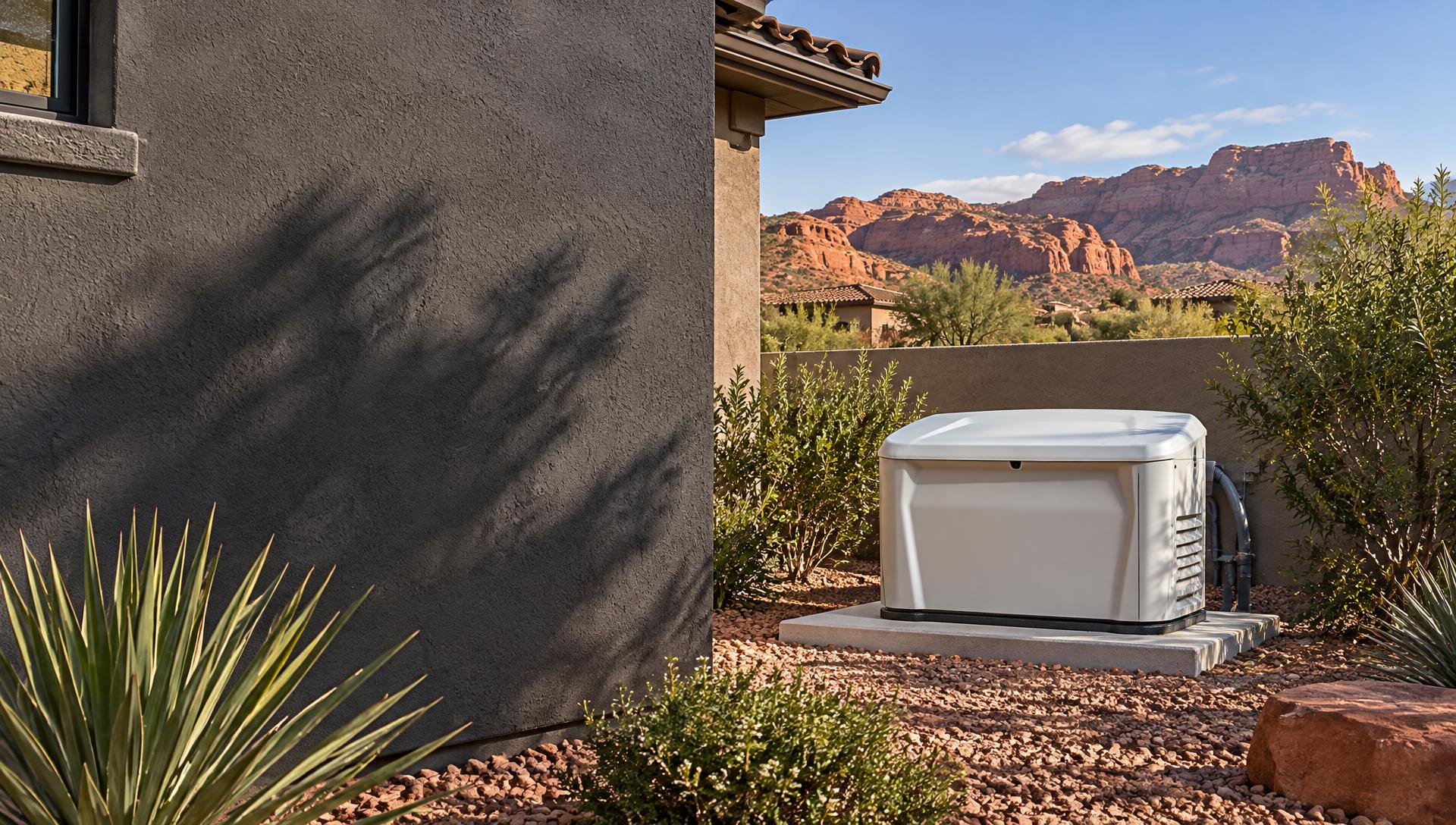
The home standby guide
Home generators in Southern Utah
An outage can change a normal evening pretty quickly. A standby generator can help keep chosen parts of your home running. Start here to understand the equipment, its limits and the decisions worth talking through.
Serving Southern Utah and surrounding communities
Permanently installed
Outdoor equipment with a fuel connection
Designed for your priorities
Coverage depends on the system
Local project conversations
Rusty Lee · Citywide Electric LLC
Start with the basics
Backup power that becomes part of the home
A home standby generator is permanently installed outside and connected to the house through compatible transfer equipment. Many residential systems run on natural gas or propane. With an automatic setup, the equipment can detect a utility outage, start the engine and supply the circuits included in the design. Understand the transfer equipment.
That does not mean every appliance comes on together, or that power is uninterrupted. There is normally a gap while the generator starts and the transfer takes place. Capacity, fuel supply, maintenance and the condition of the equipment all matter. Compare backup coverage.
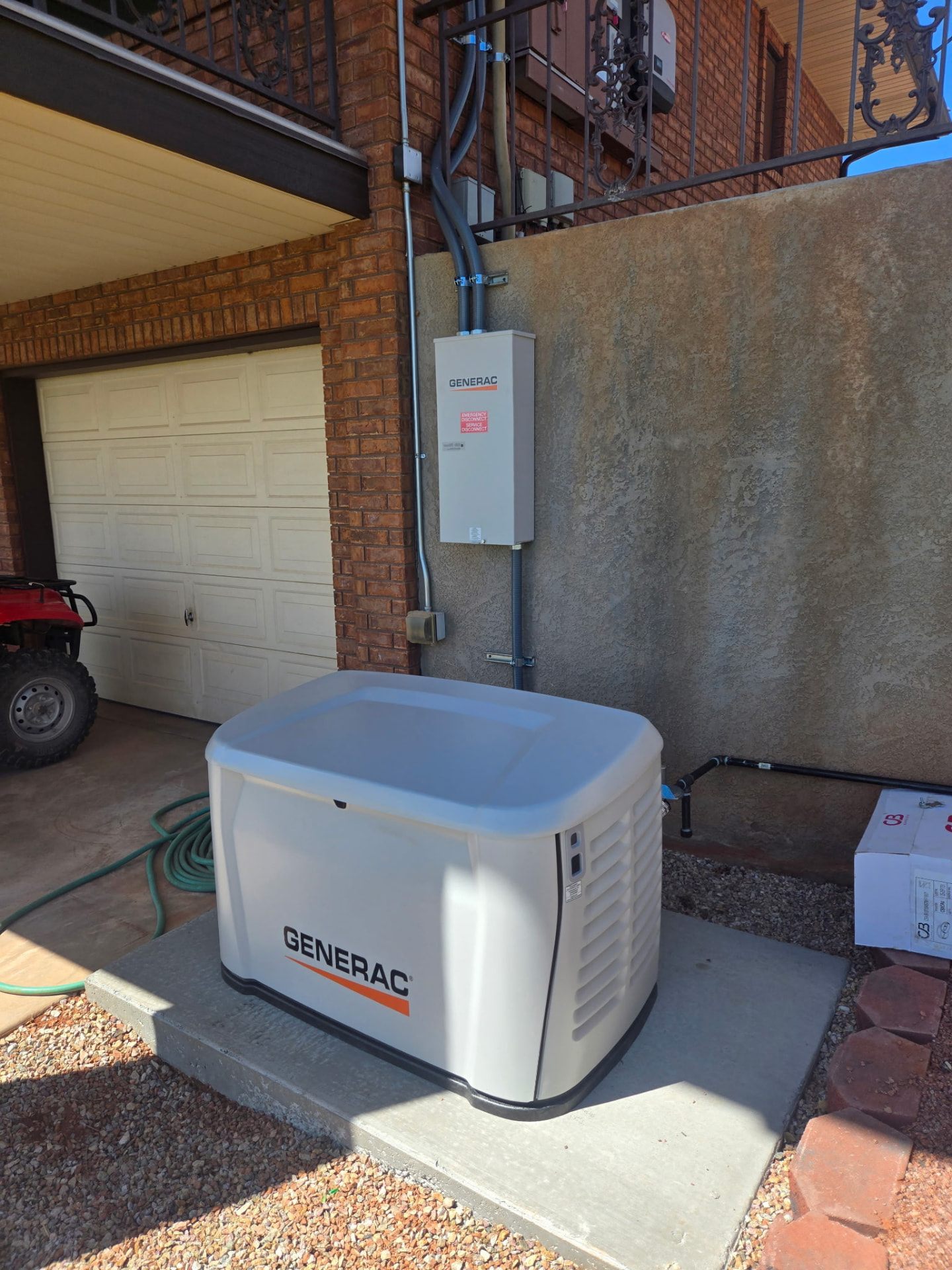
What happens during an outage
From utility power to backup, then back again
This is the usual sequence for an automatic standby system. Timing and behavior depend on the equipment, settings and fault conditions.
Utility power is interrupted
The controls detect a loss of acceptable utility power and begin the configured start sequence.
The generator starts
The engine starts and the system checks that generator power is ready. There is normally a brief power gap.
Supported circuits transfer
Compatible transfer equipment separates the supported circuits from utility power and supplies them from the generator.
Utility service returns
After utility power meets the system's return settings, the circuits normally transfer back and the engine completes a cooldown.
The system, not just the box
Several pieces need to work together
The generator is the part you see outside. A complete proposal should also explain how the house, fuel supply and controls fit together.
Generator and support
Engine, enclosure, starting battery and a suitable base, with placement and access confirmed for the model.
Installation and placementTransfer equipment
Compatible switches, electrical connections and any load controls that determine which circuits receive backup power.
Switches and load controlsFuel supply
Natural gas service or a propane system with the capacity, pressure and connections the equipment needs.
Natural gas or propaneCare and system checks
Exercise settings, inspections and maintenance based on the owner's manual. Remote monitoring, where available, does not replace service.
Maintenance planningTwo different ways to approach backup
Standby or portable: think about the routine
Portable generators are included here for context. This site focuses on permanently installed residential standby systems.
Home standby
A permanent system with planned coverage
An automatic setup can respond while you are away, provided fuel and equipment are available and functioning. Installation involves electrical work, fuel work and property checks.
Ask what happens during a fault and who will check the system when you are not home.
Portable generator
Equipment you bring out and operate
Many portable units require manual setup and refueling. Models and fuels vary. Supplying home circuits requires an appropriate, professionally installed transfer arrangement; extension cords have their own ratings and limits.
Consider who can set it up safely and manage fuel during the outage.
Before comparing models
Four questions that narrow the choices
What would you miss first?
Cooling, refrigeration, lights or internet? Make a short priority list before trying to back up everything.
Whole-home and selected-circuit coverageWhat asks for the most power?
AC compressors, electric heating and other large appliances need a closer look at running and starting demand.
Generator sizing explainedWhat fuel is available here?
An existing gas meter does not establish adequate capacity. Propane needs tank planning and a realistic refill arrangement.
Compare fuel optionsWhat work does the home need?
Placement, electrical changes, fuel routing, site preparation and permits can affect the scope and total quote.
What affects generator cost
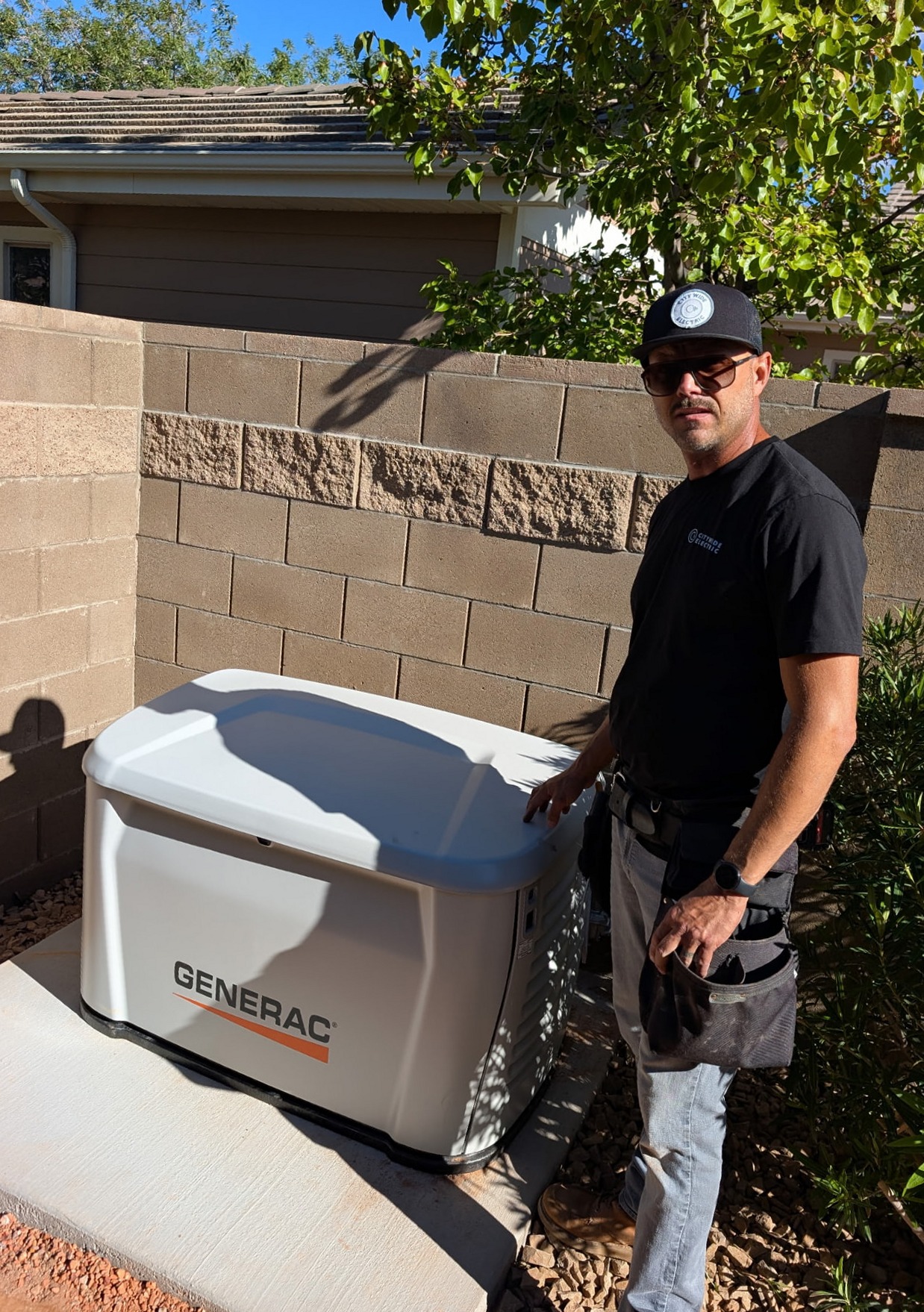
Your Southern Utah home
The address changes the conversation
- Cooling in St. George and Washington County
- If summer cooling is a priority, list each AC system. Multiple compressors may need compatible starting aids, load management or a different capacity choice.
- Winter and elevation farther north
- For Cedar City, Enoch or a mountain home, discuss heating demand, cold weather starting and the manufacturer's elevation guidance.
- Access, dust and time away
- Leave room for maintenance and checks. A second home also needs someone who can respond to a fault; a monitoring alert cannot do that work on its own.
Home generator questions
What is a home standby generator?
It is a permanently installed outdoor generator connected to the home through compatible transfer equipment. Many residential models use natural gas or propane. With an automatic setup, it can start during a utility outage and supply the circuits included in the design. Capacity, fuel supply and equipment condition determine what it can support.
Does standby backup mean whole-home coverage?
Not necessarily. A standby system may serve selected circuits or a broad portion of the home. Whole-home describes the planned coverage, not unlimited output. Large appliances may need to take turns, and some loads may be excluded. Ask for the proposed circuit list and operating limits.
Will the power stay on without a break?
There is normally a gap while the engine starts and the transfer equipment changes sources. The timing depends on the model and settings. Computers and other equipment that need uninterrupted power may require a suitable separate backup device. Medical equipment needs a plan agreed with the healthcare and equipment providers.
Can a standby generator run while I am away?
An automatic standby system can respond without someone being there to start it, provided the fuel supply and equipment are functioning. It still needs maintenance and a way to address faults or checks during a long outage. Ask what monitoring is available and who could respond at the property.
Do I need natural gas service?
No. Many residential standby models can use propane when the fuel system is properly configured. Model compatibility, available gas pressure and capacity, tank size and local fuel service all matter. Have the fuel arrangement reviewed before selecting equipment.
How much does a home generator project cost?
The total depends on the equipment, transfer setup, electrical changes, fuel work, site preparation and location. The website does not publish a price range or issue installation quotes. Rusty Lee at Citywide Electric LLC is the person to discuss a property-specific proposal and any assessment fees with.
Who would I speak with about installation?
Rusty Lee at Citywide Electric LLC handles project consultations and installation arrangements. Southern Utah Generators is an independent information and referral site, not the installation contractor, and may receive a referral fee if a referral results in an installation. Service availability varies by project and location. Online request delivery is not live yet; contact details are being finalized.
Go a little deeper
Follow the decisions, one guide at a time
- Whole-home generatorsCompare broad coverage with a selected group of circuits.
- Sizing your generatorUnderstand demand before choosing a model.
- Transfer switchesSee how backup connects to the house.
- Natural gas or propaneReview supply, storage and runtime considerations.
- Installation and costExplore the property checks and work involved.
- Maintaining your systemPlan for inspections, exercise cycles and service.
Your next step
Start with your home, not a sales pitch
You do not need to arrive with a generator picked out. Bring your questions, the equipment you want powered and what you know about your fuel supply. Rusty Lee at Citywide Electric LLC handles the project conversation and installation arrangements.
Meet Rusty and learn about CitywideYour request is saved and emailed to Southern Utah Generators. We only use your details to follow up on your consultation.
Important information
This page is general educational information, not an engineering design, electrical load calculation, installation instruction, quote or code determination. Backup coverage, transfer behavior and runtime depend on the model, fuel supply, electrical demand, site conditions and controls. A qualified professional should confirm equipment compatibility, placement, exhaust clearances and applicable permit and code requirements. Follow the manufacturer's installation and owner's manuals, including maintenance and any required shutdowns. Photos are not installation specifications.
Southern Utah Generators is an independent generator information and referral site, not an installation contractor. Project consultations and installation services are handled by Rusty Lee at Citywide Electric LLC, Utah contractor license #9265366-5501 (E200, E201). Southern Utah Generators may receive a referral fee if a referral results in an installation. How this site works.
Manufacturer names or branding visible in real equipment photos identify the equipment only. They do not imply that Southern Utah Generators represents, is endorsed by, or has authorized dealer or service status with a manufacturer. Generac is a trademark of its respective owner.