
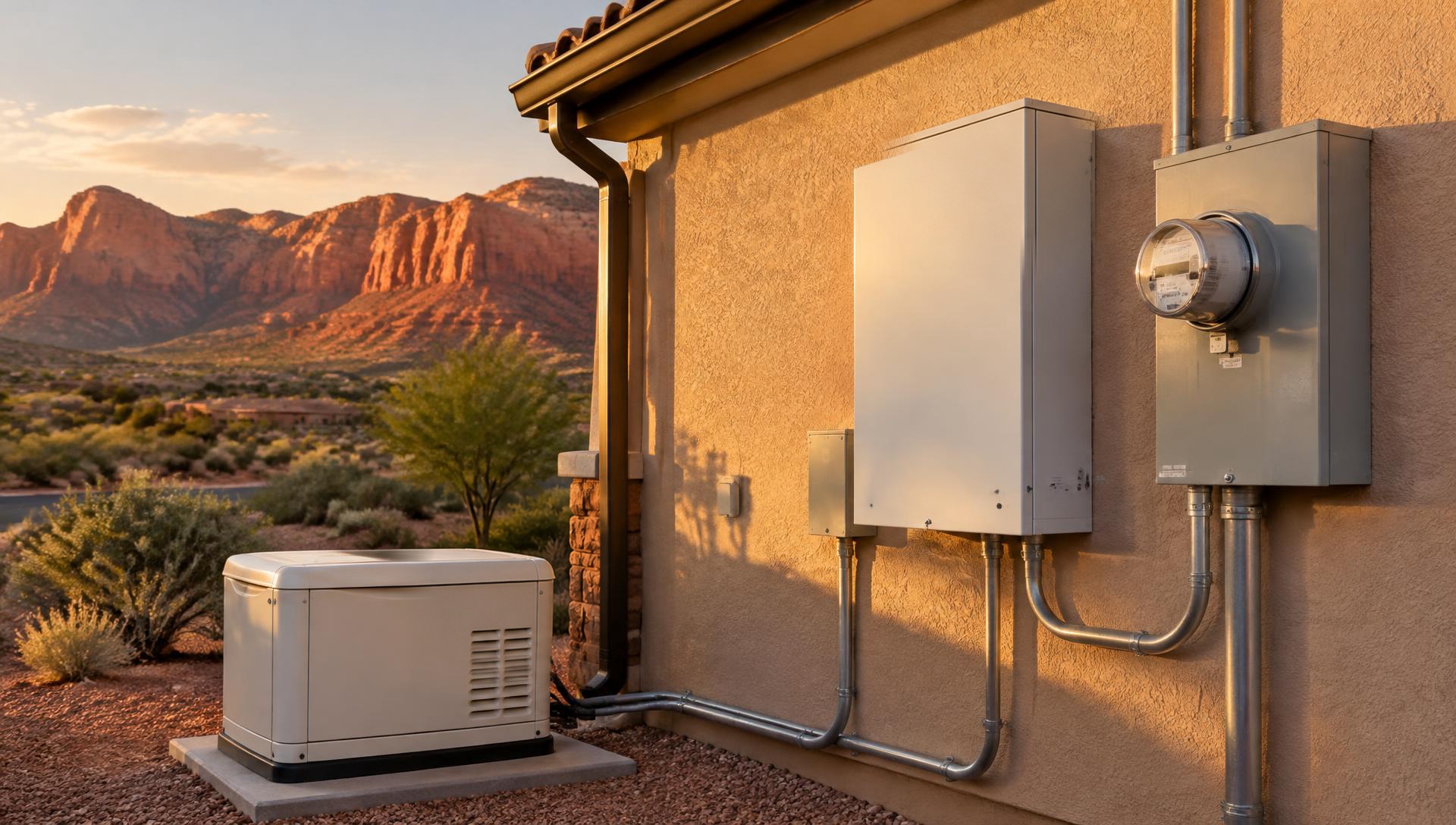
Transfer equipment
Generator transfer switches, explained
The transfer switch is the bridge between the generator and your home. It's what makes a standby system automatic, and it's what makes it safe. Homeowners tend to shop for generators. Electricians pay just as much attention to the transfer equipment, because that's where the system meets the house.
St. George, Utah & surrounding communities
Automatic by design
Detects, starts and transfers within seconds
A safety device first
Keeps generator power off the utility lines
Licensed electrician
Rusty Lee, Citywide Electric LLC
The short answer
What does a transfer switch actually do?
The switch sits between the utility service and your home's electrical panel. It keeps an eye on utility power and decides which source the house is connected to at any moment.
When utility power fails, the switch signals the generator to start. Once the generator is running and stable, the switch disconnects the home from the utility and connects it to generator power. When the utility comes back and holds steady, the switch transfers back and lets the generator cool down before it shuts off.
The important part: the switch never connects both sources at once. That separation is the whole point, and it's why the transfer switch is treated as part of the system, not an accessory. Our home generator guide shows how it fits with the rest of the equipment.
Safety
Why a generator can't just be wired to a panel
Without proper transfer equipment, generator power can flow backward onto the utility lines feeding the home. That backfeed endangers line workers who may be repairing lines they believe are off, and it can damage the generator and the home's equipment when utility power returns.
This is why homemade hookups and so-called suicide cords are dangerous, and why code requires transfer equipment. It's also why the transfer switch isn't the place to cut costs on a standby installation.
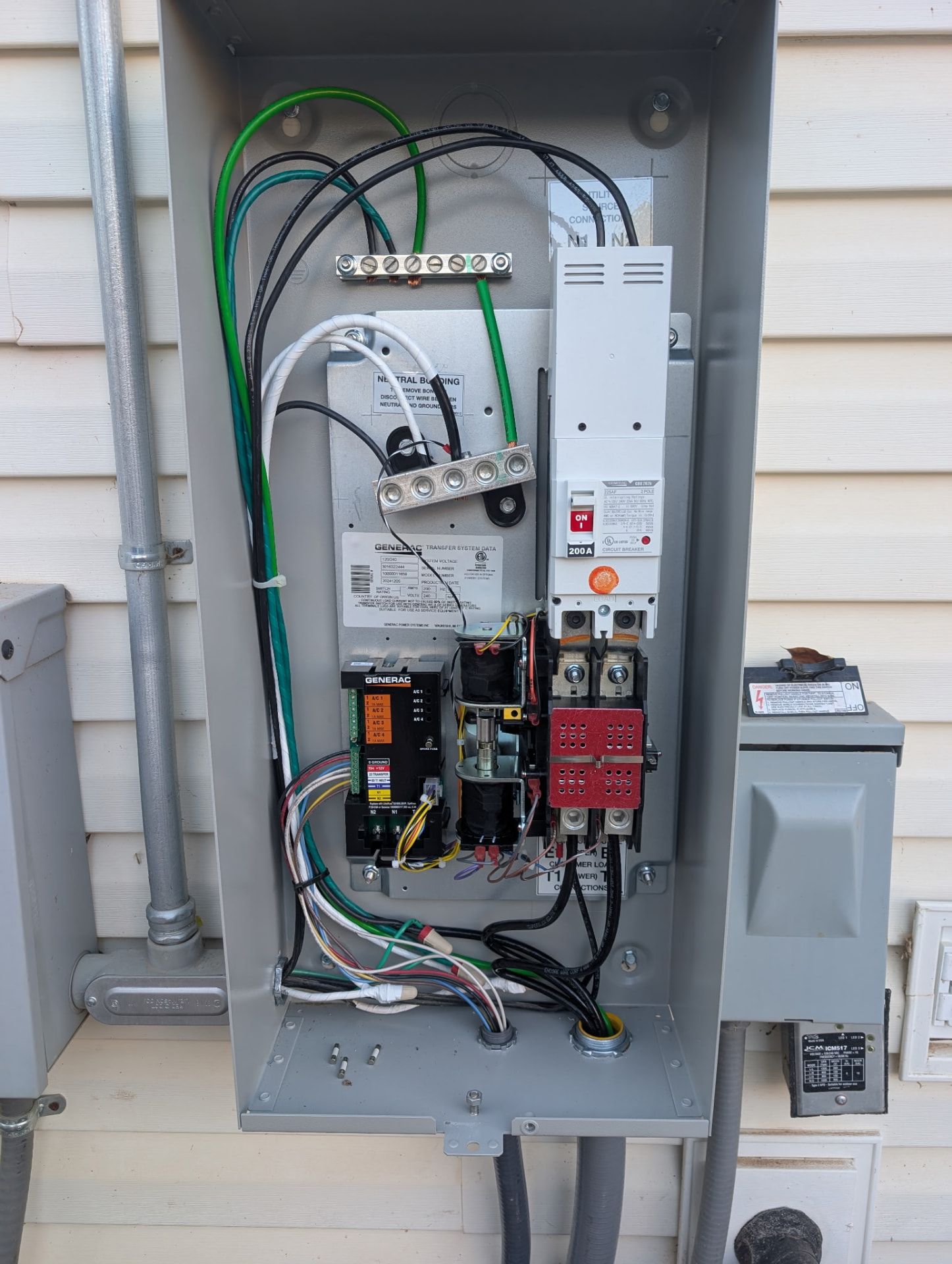
Types
Three ways to set up transfer
The right setup depends on what you want powered, the size of your service and the generator you choose. These are the three common approaches.
Whole-home transfer
The switch is installed at the service so the entire panel can be carried by the generator. With enough generator capacity, this is what most people mean by whole-home backup.
Whole-home generatorsEssential-load transfer
A chosen set of circuits moves to a backed-up panel: refrigeration, heating or cooling, water, internet, key lighting and outlets. Lower cost, deliberate priorities.
Generator sizingLoad management
A whole-home switch plus modules that keep heavy loads from starting at the same time, so a right-sized generator can serve a larger home.
How sizing works
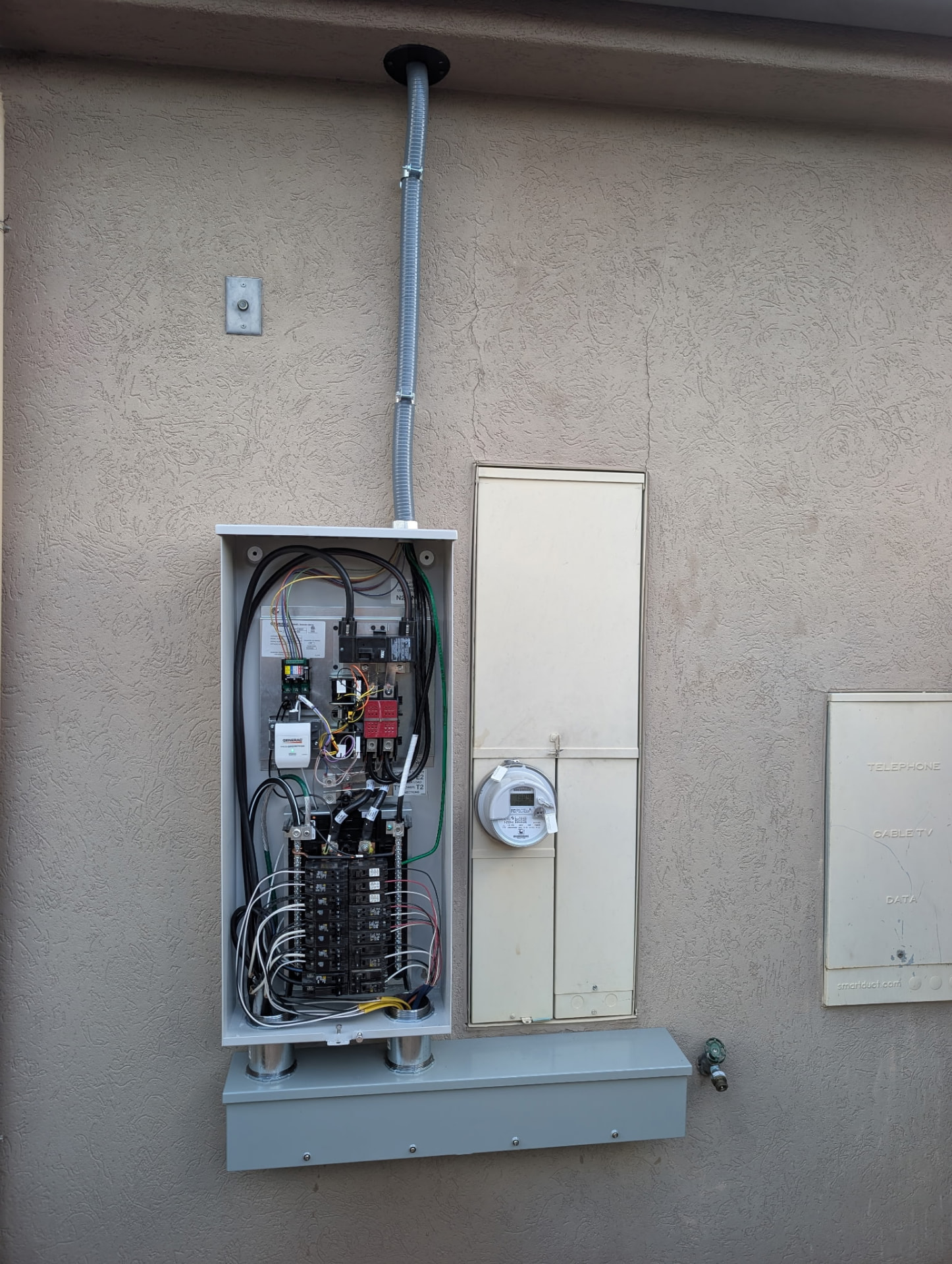
Design
What goes into designing the transfer setup
A transfer switch isn't one size fits all. Each of these gets checked at the property before equipment is picked.
- Switch rating matched to the electrical service
- Placement relative to the meter, panel and generator
- Neutral and grounding configuration
- Which circuits transfer and which do not
- Whether load management is needed
- Panel condition, space and any modifications
- Surge and overcurrent protection
- Access for service and inspection
Transfer equipment choices also shape the budget. Our cost guide explains how.
Questions
Transfer switch questions
Do I need a transfer switch for a standby generator?
Yes. A standby generator should not be connected to a home's electrical system without proper transfer equipment. It's a code requirement and a basic safety measure.
How does an automatic transfer switch work?
It watches utility power, starts the generator when the utility fails, moves the home's load to the generator once it's running steady, then transfers back and shuts the generator down after utility power returns and holds.
How quickly does the transfer happen?
Most residential systems detect, start and transfer within seconds. There is a brief gap, so electronics that can't tolerate any interruption still need their own battery backup.
What's the difference between a manual and an automatic transfer switch?
A manual switch needs someone there to start the generator and move the switch. An automatic switch does both on its own, which is what makes standby power useful when nobody is home.
More answers on our generator FAQ page.
Keep reading
Related generator guides
- Home standby generatorsHow the full system works together.
- Whole-home generatorsCoverage levels and how transfer equipment defines them.
- Generator installationWhere the transfer switch fits in a typical install.
- Generator sizingHow load management changes the sizing conversation.
- Generator costHow transfer equipment choices affect project scope.
This page is general information, not a design, quote or code ruling. Transfer equipment ratings, placement and wiring requirements vary by service, equipment and local code. Confirm details with your installer and your local building department before you decide. Generac is a trademark of its respective owner.
Next step
Not sure which setup fits your home?
Rusty Lee of Citywide Electric LLC, a Utah licensed electrical contractor, can look at your panel, your service and what you'd like to keep running, then talk through the transfer options that fit.