
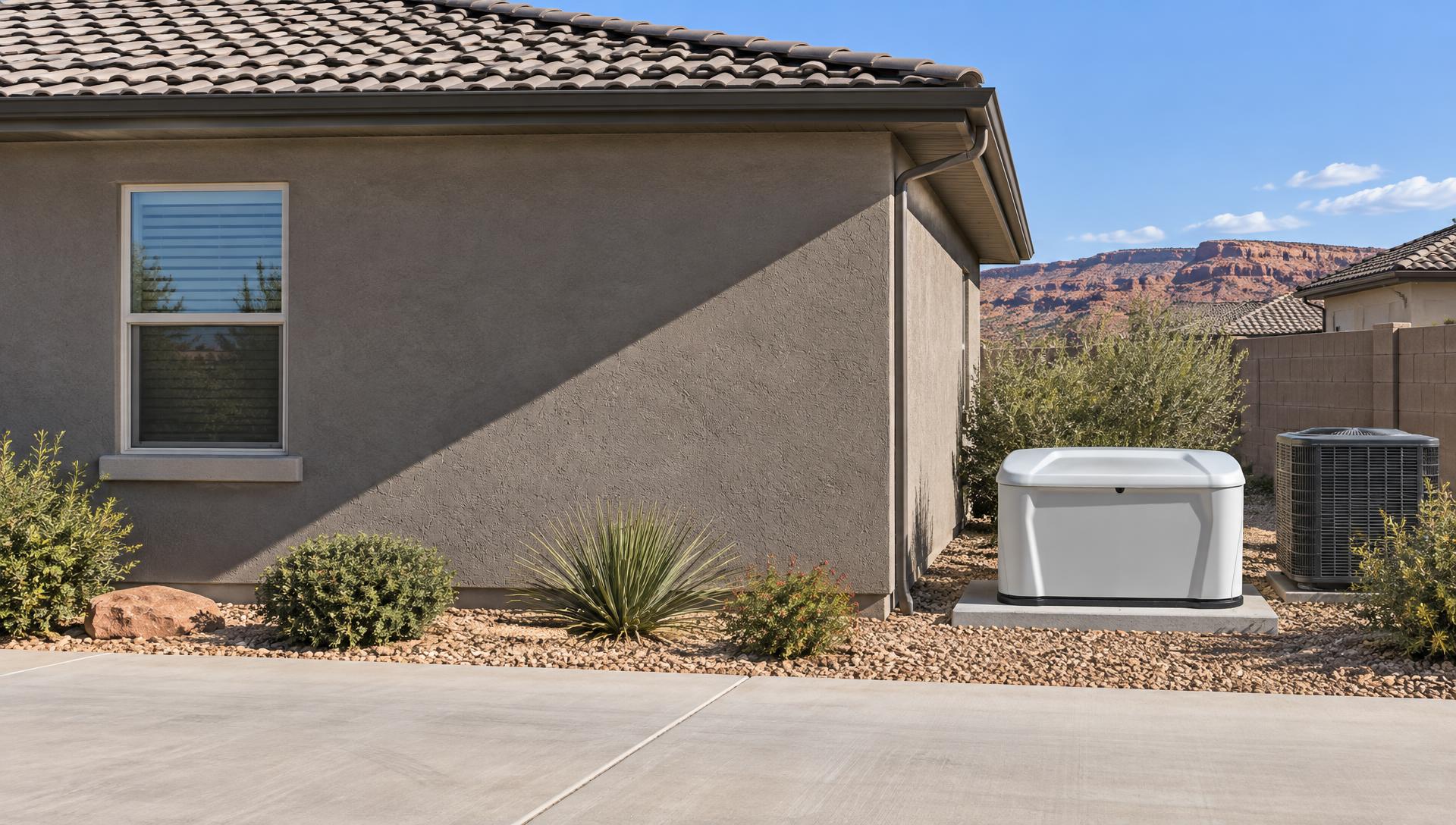
Residential backup power
Whole-home generators in Southern Utah
Keep the parts of home that matter to you in the conversation: cooling, the refrigerator, lights and your everyday routines. A whole-home system can support broad coverage, but what runs together depends on the design.
Serving Southern Utah and surrounding communities
Coverage comes first
Decide what you want running
Capacity still matters
Large appliances may take turns
Local project conversations
Rusty Lee · Citywide Electric LLC
The short answer
Whole-home does not mean everything at once
A whole-home generator is a permanently installed standby system configured to serve a broad portion of your home's electrical system. Unlike backup for a few selected circuits, it can give you more flexibility about what you use. Start with the home standby generator basics.
The important question is what the generator can carry at the same time. Two air conditioners, an electric oven and a water heater can ask for more power than a particular unit can provide. The generator sizing guide explains both running demand and the extra power motors need to start.
Compatible transfer equipment connects the supported circuits to generator power and isolates them from utility power. Broader panel coverage does not increase generator output. Learn how transfer switches and load management fit into that design.
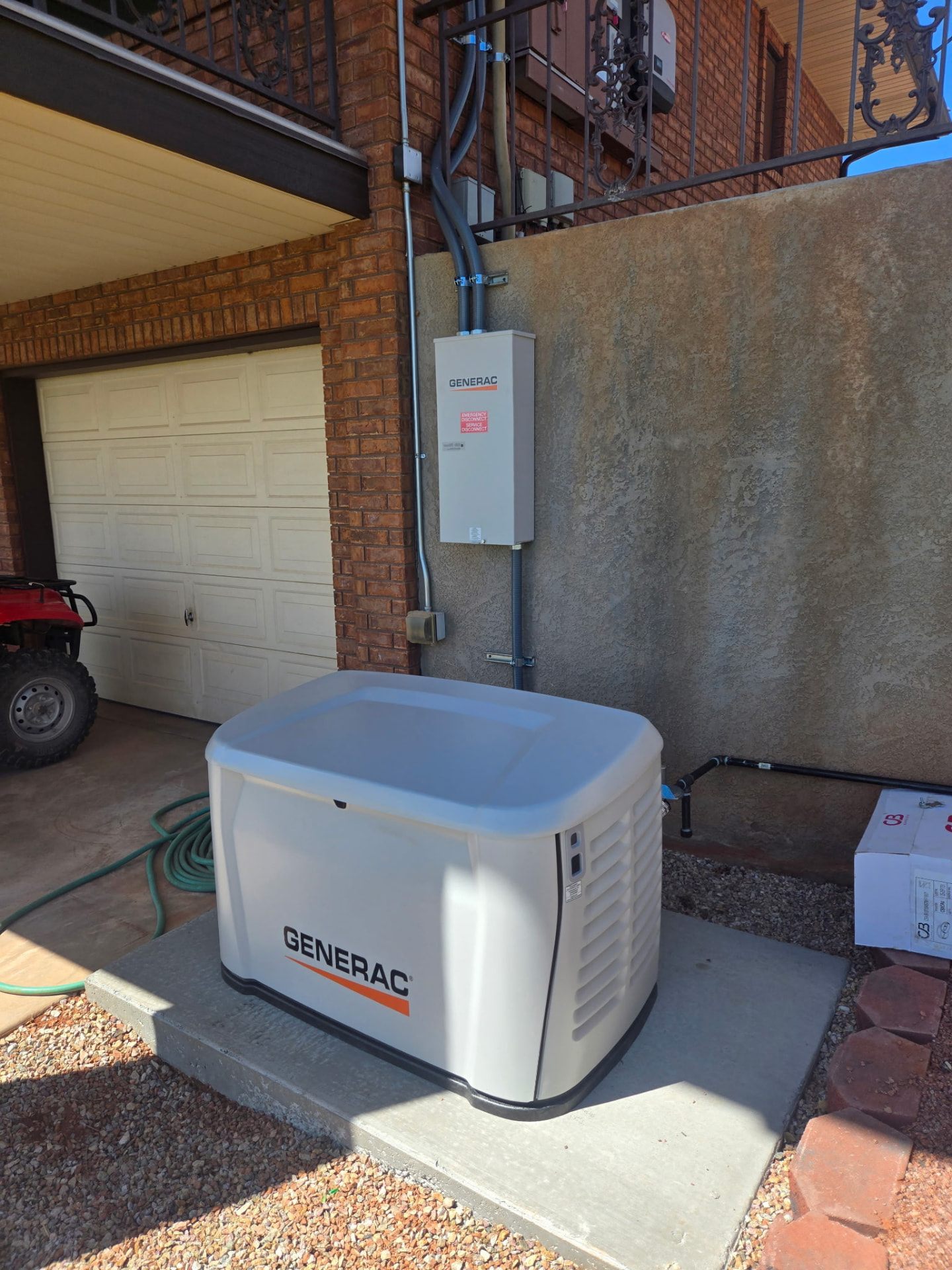
Choose your coverage
What would you like to keep running?
There is no single setup that fits every household. Think about the routines you care about, then compare how each option would support them.
Whole-home coverage
Broader access to the home's circuits
Transfer equipment is configured for broad coverage. The generator still has a capacity limit, so some appliances may need to wait while others run.
Ask which large loads can operate together and which are excluded or managed.
Understand capacitySelected-circuit coverage
A defined list of backup circuits
The design supplies selected circuits, such as refrigeration, lighting, internet and chosen heating or cooling equipment. Circuits outside that list are not supplied by the generator.
Ask for the supported circuit list. A smaller scope does not automatically mean a lower total installation cost.
Compare transfer setupsLoad management: let bigger appliances take turns
Compatible controls can temporarily delay or disconnect designated loads when other equipment needs the available power. That can support broader coverage without sizing for every appliance to run together. It does not add capacity, and a managed appliance may be unavailable for a while.
See what affects project costBuild your list
Start with the things you actually use
These are planning examples, not a promise that every item can run together. Tell the electrician what matters most and what you could leave off during an outage.
Cooling and heating
AC compressors, furnace blowers and heat pumps. Electric resistance heat deserves particular attention.
Kitchen and refrigeration
Refrigerators, freezers, cooking appliances and the outlets you use every day.
Lights and connections
Lighting, internet equipment, security systems and garage door openers.
Water heating and pumps
Electric water heaters and any pool, booster or well pump the property has.
Optional larger loads
Spa equipment, workshop tools or EV charging may be excluded or assigned a lower priority.
Future changes
An additional AC system or a change to electric appliances can affect the backup plan.
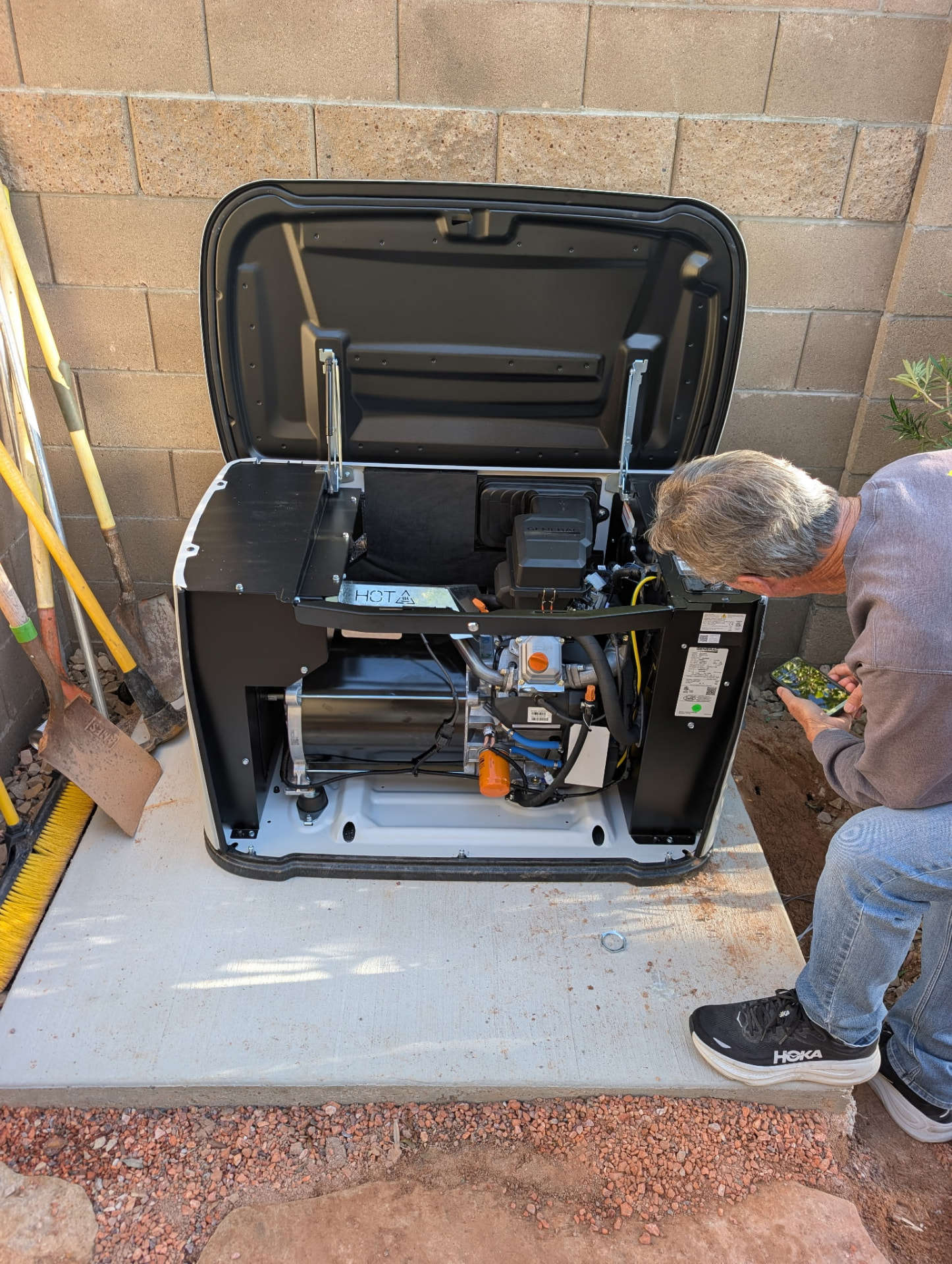
Southern Utah considerations
The house and the location both shape the plan
- St. George and nearby valley homes
- For a home with substantial summer cooling demand, ask about compressor starting power and how the AC systems will share capacity.
- Cedar City, Enoch and mountain communities
- Heating equipment, cold weather starting and manufacturer guidance for elevation may change the equipment choice and available output.
- Fuel at your address
- Natural gas needs sufficient supply and pressure, not just an existing meter. Propane needs usable tank capacity and a refill plan. Either option deserves a property-specific review.
Before you choose equipment
A good proposal should answer these questions
What is supported?
The backed up circuits, larger loads that can run together, and anything intentionally left out.
What does the property need?
Electrical service, transfer equipment, fuel capacity, placement, access, permits and inspections.
What happens in a longer outage?
Fuel consumption, checks required by the manual, maintenance and any planned shutdowns.
Review the installation process.
Plan for generator maintenance.
Whole-home generator questions
Will a whole-home generator run every appliance at once?
Not necessarily. Whole-home describes broad electrical coverage, not unlimited output. Your home's demand, the generator's ratings and the load-management settings determine what can run together. Ask the installer to explain the limits of the proposed setup.
Can it run two air conditioners?
It may, if the generator can handle both compressors and the other loads operating alongside them. Starting power matters as well as running power. The design may use compatible starting aids or load management, depending on the equipment.
How is whole-home backup different from selected-circuit backup?
Whole-home coverage can make a broad portion of the home's circuits available on generator power, within the system's limits. Selected-circuit backup supplies a defined group of circuits. The right choice depends on your priorities, electrical setup and project scope.
Does load management make the generator more powerful?
No. It manages demand rather than increasing output. Compatible controls may delay or disconnect designated loads so capacity is available for higher-priority equipment. Ask which appliances could be interrupted and how they are restored.
How long can a whole-home generator run?
Runtime depends on the model, electrical demand, fuel supply and maintenance requirements. Natural gas service can be interrupted. Propane has a limited usable tank supply. During a long outage, follow the owner's manual for checks and any required shutdowns rather than assuming uninterrupted operation.
How much does whole-home generator installation cost?
Equipment size, transfer setup, electrical changes, fuel work, site preparation and your location can all affect the total. This website does not publish a price range or issue installation quotes. Discuss a property-specific proposal and any assessment fees with Rusty Lee at Citywide Electric LLC.
Who handles the project conversation and installation?
Rusty Lee at Citywide Electric LLC handles project consultations and installation arrangements. Southern Utah Generators is an independent information and referral website, not the installation contractor, and may receive a referral fee if a referral results in an installation. Online request delivery is not live yet; contact details are being finalized.
The next decisions in your backup plan
- Generator sizingMatch your priorities to running and starting demand.
- Generator costUnderstand the equipment and site work behind a quote.
- Transfer switchesCompare coverage and compatible load controls.
- Natural gas or propaneReview fuel supply, tank planning and runtime.
- InstallationSee the property checks and work to discuss.
- MaintenancePlan for the care your standby system needs.
Your next step
Bring your priorities, not a model number
Rusty Lee at Citywide Electric LLC is the person to discuss your loads, property and installation options with. Start by deciding what you want powered and what you are comfortable leaving off.
Meet Rusty and learn about CitywideYour request is saved and emailed to Southern Utah Generators. We only use your details to follow up on your consultation.
Important information
This guide is general educational information, not an engineering design, electrical load calculation, installation instruction, quote or code determination. Capacity, runtime and supported equipment depend on the selected model, fuel supply, site conditions, electrical demand and controls. Have a qualified professional confirm the design, placement and applicable permit and code requirements. Follow the manufacturer's installation and owner's manuals, including exhaust clearances, maintenance and required shutdowns. Photographs are not installation specifications.
Southern Utah Generators is an independent generator information and referral site, not an installation contractor. Project consultations and installation services are handled by Rusty Lee at Citywide Electric LLC, Utah contractor license #9265366-5501 (E200, E201). Southern Utah Generators may receive a referral fee if a referral results in an installation. How this site works.
Manufacturer names or branding visible in real equipment photos are used for identification. They do not imply that Southern Utah Generators represents, is endorsed by, or holds authorized dealer or service status with a manufacturer. Generac is a trademark of its respective owner.