
Maintenance guide
Keeping a home standby generator ready to run.
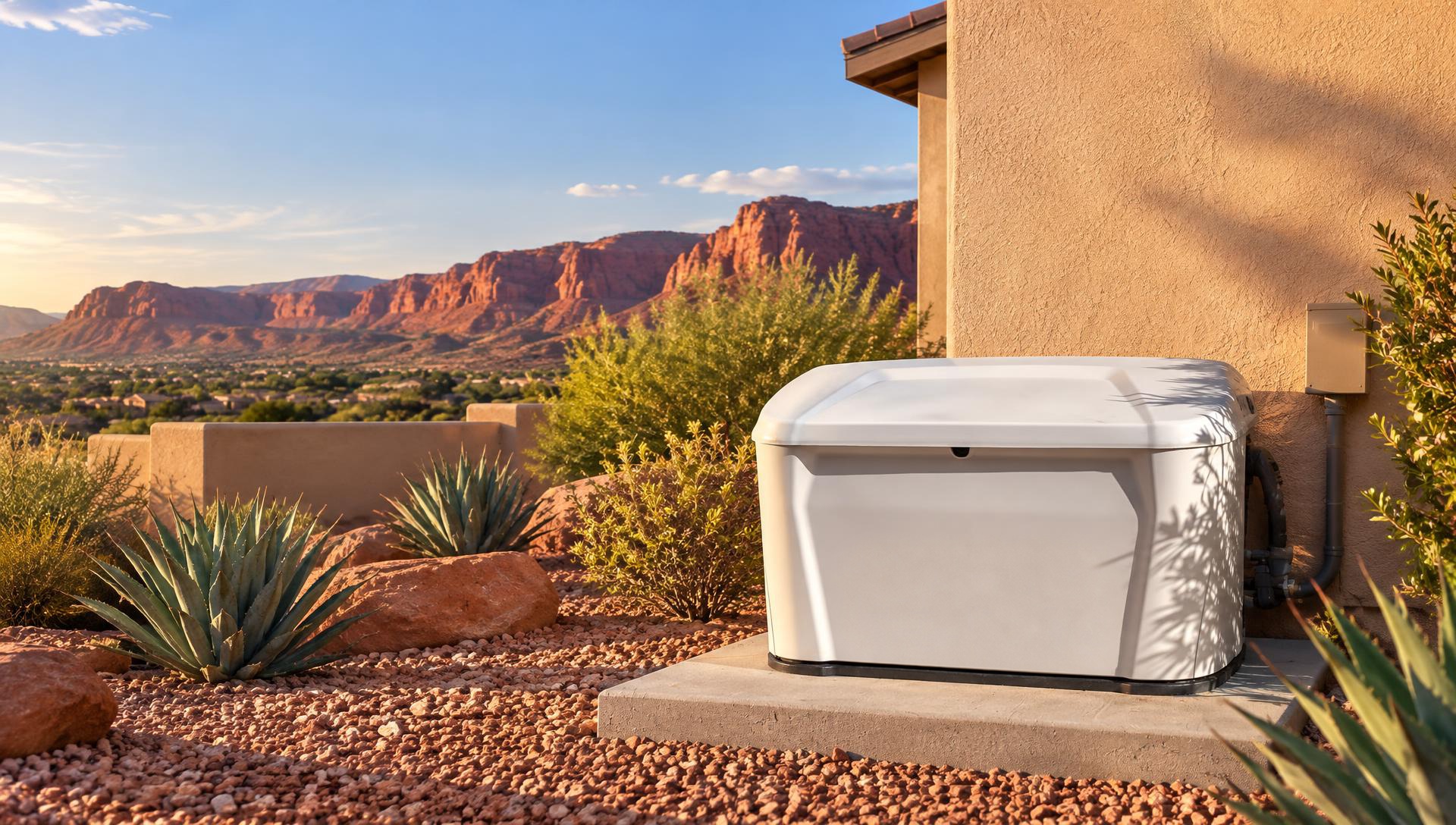
Your generator sits quietly almost all year. Regular upkeep gives it a much better shot at starting when the power drops at 2 a.m. in the middle of July. Here's what that upkeep looks like for homes around St. George and the rest of Southern Utah.
St. George, Utah & surrounding communities
Follow your manual
Intervals are set by hours and calendar time
Built for local conditions
Heat, dust and winter access all matter
Licensed electrician
Rusty Lee, Citywide Electric LLC
The short answer
How often does a home generator need service?
For most homeowners it comes down to a yearly visit, plus a quick look whenever you're out in the yard. Your owner's manual has the real numbers. Generac, Kohler and other makers list service by run hours and by time, and keeping up with them is often tied to warranty coverage.
Southern Utah adds a few wrinkles. Heat wears on batteries, wind blows dust into filters, and cabins up the mountain have snow to think about. None of that is a reason to worry. It just means the routine here looks a little different than it would in a mild coastal town.
Routine service
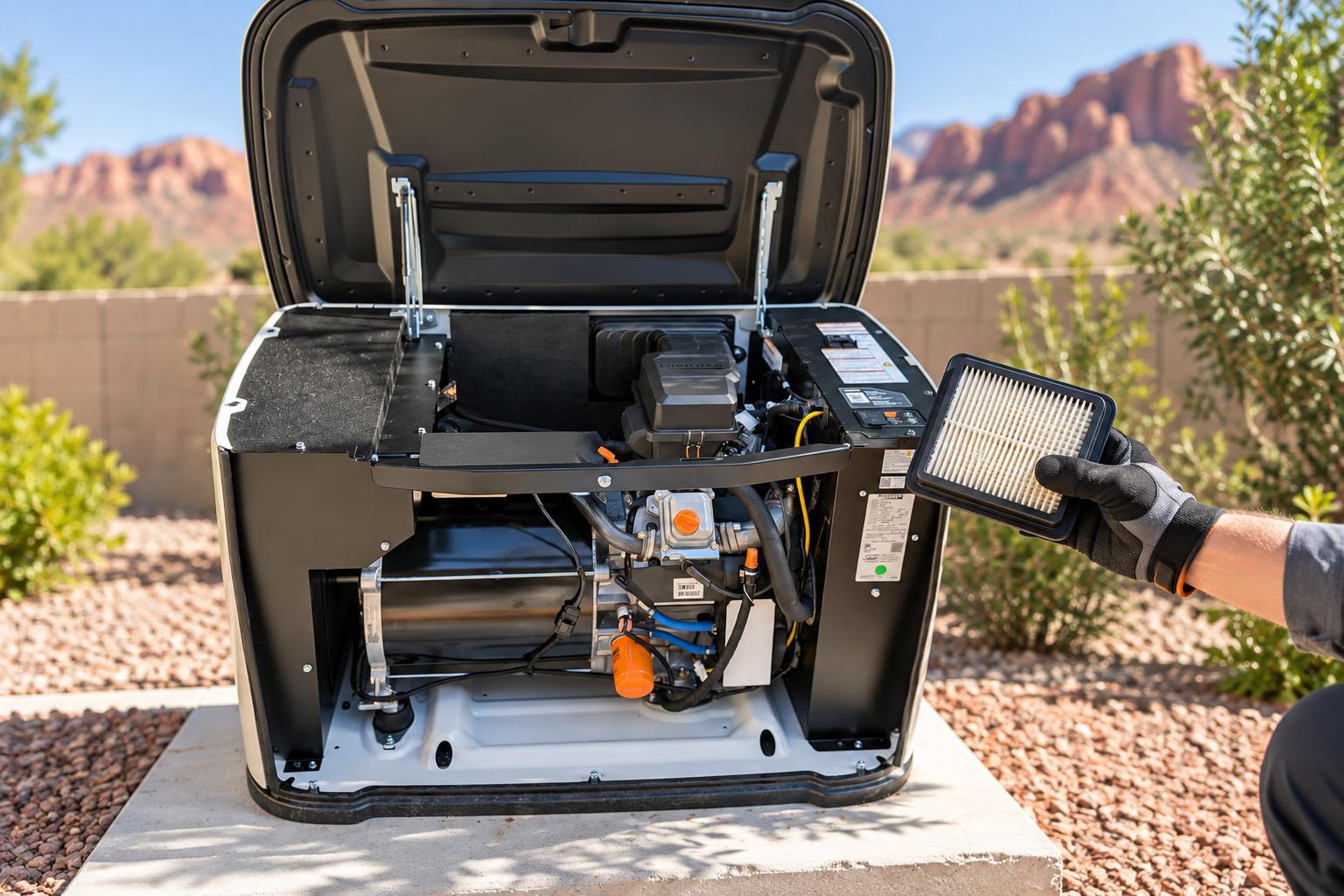
What a typical service visit covers
Exact items vary by model and fuel type, but these are the ones that come up most.
Oil and oil filter
Changed on the schedule your owner's manual lists for hours or time.
Air filter
Checked often here. Desert dust can clog one faster than you'd expect.
Spark plugs
Inspected and replaced at the intervals the manufacturer suggests.
Starting battery
Terminals, charge and age. A tired battery is a common reason units don't start.
Fuel connections
Lines, regulator and fittings looked over for wear or leaks.
Airflow and enclosure
Louvers cleared of dust, leaves and the odd packrat nest.
Controller and fault log
Recent alerts reviewed so small issues get handled early.
Transfer switch
Inspected and tested so the handoff from utility power works.
Liquid cooled units also get coolant, belts and hoses checked. A load test may be done when it makes sense.
Exercise cycles
Why your generator runs by itself every week
Most standby units fire up on a set schedule for a few minutes. That short run moves oil through the engine, keeps the battery topped off and lets the controller spot problems while there's still time to fix them.
You can usually pick the day and time. A weekday afternoon tends to bother the neighbors the least. If the unit starts logging faults during these runs, that's useful information, not a crisis. Just don't treat a good exercise run as proof everything will work under a full load during an outage.
- 01
Weekly or biweekly
The generator runs a short self test on its own. Glance at the status light now and then.
- 02
A few times a year
Walk around the unit. Clear weeds, debris and anything stacked against it.
- 03
Once a year, roughly
Professional service based on your manual, your run hours and local conditions.
- 04
After a long outage
Heavy run time can move service up. Check the hours on the controller.
Local conditions
Desert heat, blowing dust and high country winters
Summer heat
Long stretches over 100°F are hard on batteries and cooling. It's worth asking whether your battery should be swapped a little sooner than you'd guess.
Dust and wind
Spring winds push fine red dust into everything. Filters and louvers usually need a closer look after a windy season.
Mountain winters
In Pine Valley, Brian Head or Duck Creek, keep a path to the unit clear of snow and plan propane deliveries before the roads get tricky.
Cedar City, Enoch and Beaver sit higher too, so winter access is worth planning for there as well.
Need a hand?
Questions about your generator?
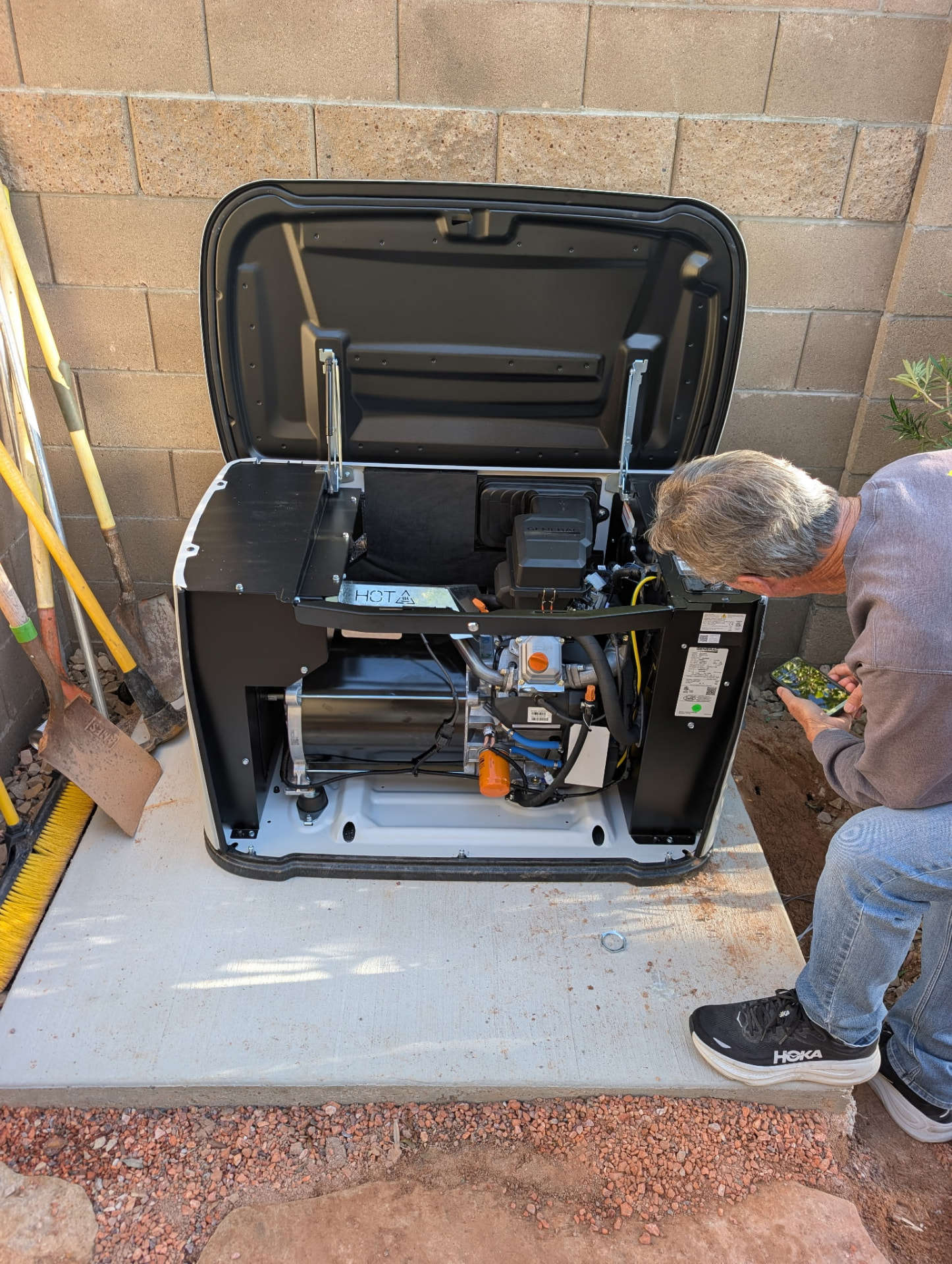
If your unit is showing a warning, hasn't been serviced in a while, or you just aren't sure what it needs, reach out. Requests go to Rusty Lee, a master electrician with Citywide Electric LLC and 27 years in the trade. He can talk through what makes sense for your system.
Common questions
Generator maintenance questions
How often should a generator be serviced?
Start with the schedule in your model’s owner’s manual. Service may be due after a set number of running hours, a period of time or both. Oil, filters, spark plugs and the battery are common checks. Ask your technician whether Southern Utah’s heat and dust call for extra attention to filters and cooling.
How long do generators last?
There’s no single lifespan to count on. The model, hours of use, maintenance and outdoor conditions all play a part. If you already have a generator, a technician can review its condition and service history rather than judging it by age alone.
Do generators need to be exercised?
Most home standby systems have a scheduled exercise cycle that runs the engine briefly. It can help reveal some problems, but a successful exercise run doesn’t prove the whole system will work during an outage. Follow your owner’s manual for exercise settings, battery care and maintenance.