
Fuel guide
Natural gas or propane for your home generator?
Most home standby generators run on one or the other, and many models can be set up for either. Neither one is right for every house. For most people the choice starts with what's already at the property, then comes down to how long you'd like to run during an outage.
St. George, Utah & surrounding communities
Start with what you have
Existing gas service usually shapes the choice
Think about runtime
How long you want to go without refueling
Licensed electrician
Rusty Lee, Citywide Electric LLC
The short answer
Which fuel is better for a standby generator?
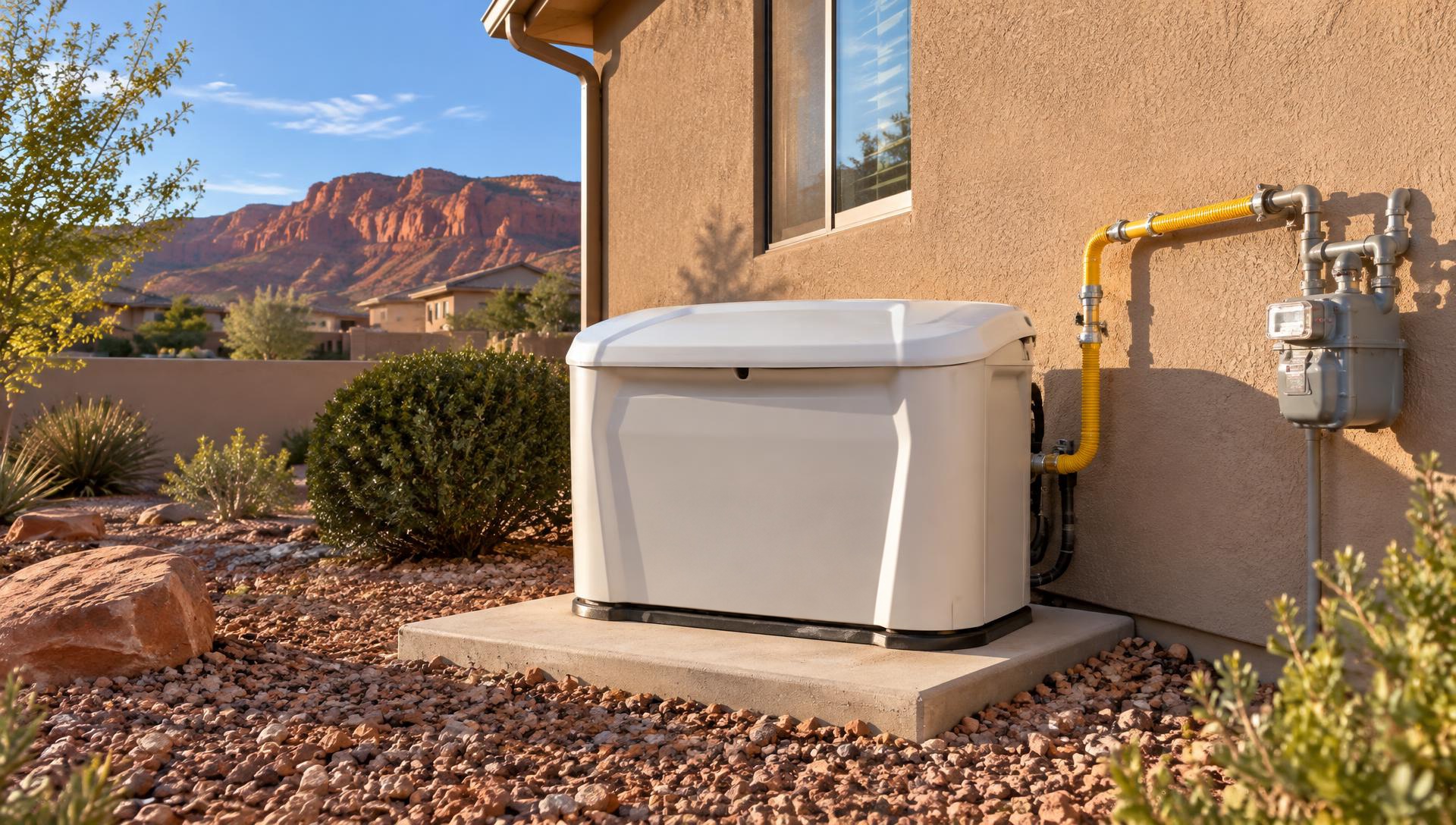
If your home already has natural gas, that's often the simpler place to start. There's no tank to refill, and the generator draws fuel from the utility line. The catch is that the meter and piping need to deliver enough fuel to the spot where the generator will sit.
If there's no gas line, propane is the usual answer. Then the planning turns to tank size, where the tank goes and how a delivery truck reaches it. Some people with gas service still pick propane because they like having fuel stored on their own property. Both are reasonable. The right fit depends on your house, your loads and how you live. Our sizing guide explains how those loads affect fuel use.
Natural gas
When the house already has a gas line
A standby generator can pull a lot of gas when it's working hard. Your existing meter and lines might handle that, or they might need an upgrade, a dedicated run, or a call to the gas utility. That's something to check on site before anything is quoted.
- Works where the home already has gas service
- Meter and line need enough volume and pressure for the generator
- Pipe size and distance to the pad affect the install
- No tank to refill, though utility supply can still be interrupted
Propane
When there's no gas service nearby
With propane, runtime comes down to how much fuel is in the tank and how much the generator is powering. A unit running the whole house will go through a tank faster than one covering a few key circuits, so it helps to pick a tank around the outage length you care about.
- Common on rural lots and in mountain areas without gas lines
- Runtime depends on tank size and how hard the unit is working
- Needs room for delivery trucks, including in winter
- Owned or leased tanks come with different rules from suppliers
Propane planning
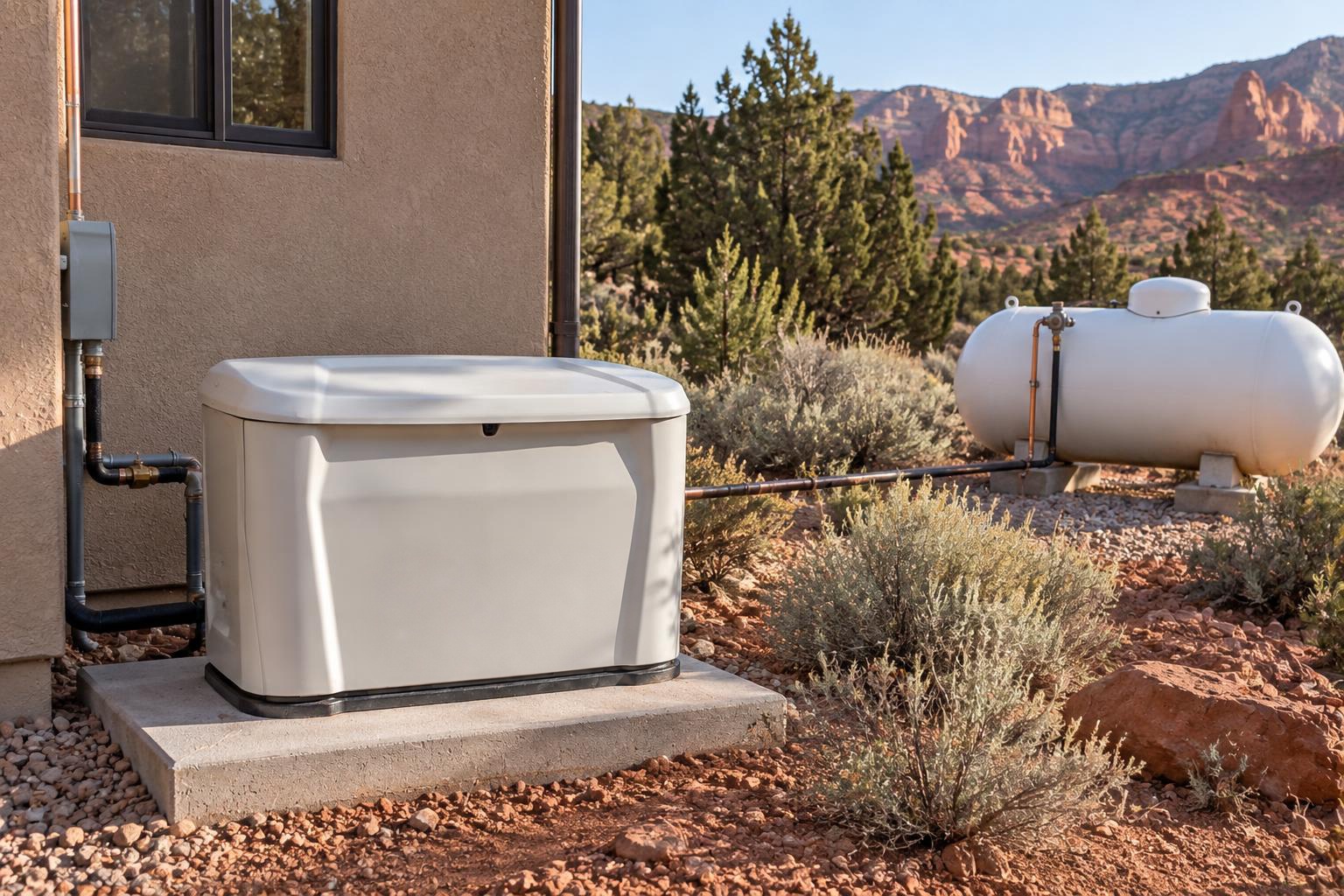
How big should a propane tank be?
There isn't one number that fits every home. Tank size depends on the generator, the loads it carries, whether other appliances share the tank and how many days you'd like to cover. Your generator's spec sheet lists fuel use at different loads, which is a good place to start the math.
Placement matters too. Propane suppliers and local code set distances from the house, property lines and the generator. Your supplier will also want a clear route for the truck. Fuel line work can change the overall price, which our cost guide walks through.
Side by side
Natural gas and propane compared
| Question | Natural gas | Propane |
|---|---|---|
| Where it fits best | Neighborhoods with existing gas service, like much of St. George and Washington | Rural lots, cabins and homes without a gas line |
| Fuel on site | None. Fuel comes from the utility | Stored in a tank you or a supplier own |
| Runtime | Usually limited by maintenance intervals rather than fuel | Limited by usable tank volume and load |
| Main install question | Can the meter and piping deliver enough fuel? | What tank size, where, and how far from the generator? |
| Ongoing tasks | Routine generator service | Routine service plus watching tank levels and scheduling refills |
Around Southern Utah
Fuel options change from town to town
St. George valley
Many newer subdivisions in St. George, Washington, Hurricane and Ivins have natural gas, so it's often the first option people look at.
Pine Valley and Brian Head
Cabins up the mountain often rely on propane. Tank placement and a plowed path for delivery matter a lot here.
Cedar City, Enoch and Beaver
Colder winters mean furnaces and the generator may share fuel. It's worth sizing for both during a long outage.
See the full list of communities on our service areas page.
Your property
Not sure which fuel makes sense?
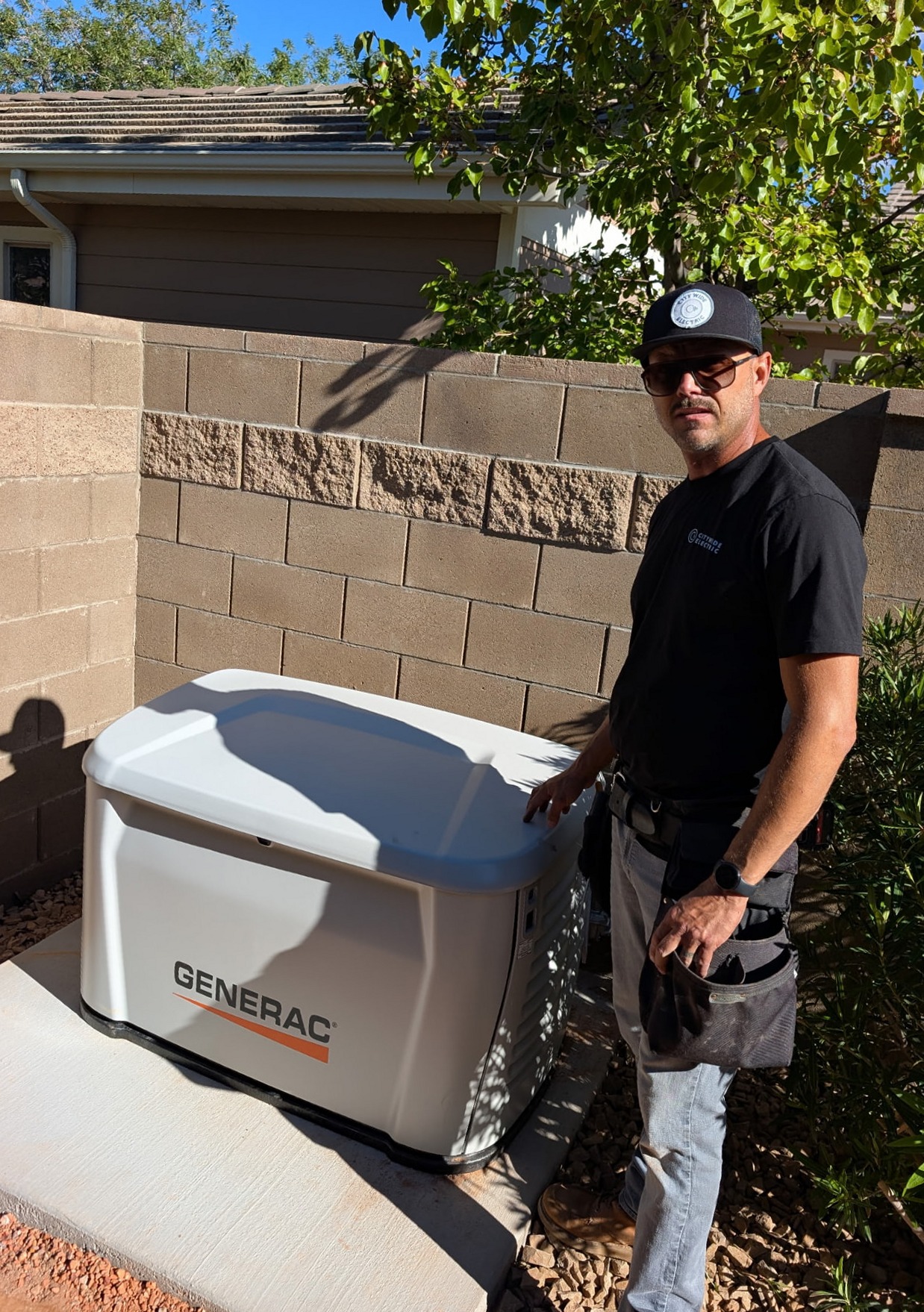
That's a normal place to be. Rusty Lee of Citywide Electric LLC, a Utah licensed electrical contractor, can look at your gas service or propane setup, the spot where a generator could go and what you'd like to keep running. Fuel line work may involve a licensed gas or plumbing contractor, your gas utility or your propane supplier.
Questions
Generator fuel questions
Do generators run on natural gas?
Many home standby models do. Natural gas can be convenient if your home has service, but the supply needs enough capacity and pressure for the generator. Having a gas meter doesn’t necessarily mean the existing supply is sufficient, and gas service can be interrupted.
Do generators run on propane?
Many home standby models can use propane. It can be an option where natural gas isn’t available. How long the generator runs depends on the usable fuel in the tank and how much power you’re using, so tank sizing belongs in the planning conversation.
Which is better, natural gas or propane?
That depends on your home. Natural gas may be simpler where suitable service is already available. Propane needs a tank and a plan for refills, but it can work where natural gas isn’t an option. Compare the generator’s ratings for each fuel and ask whether your supply can meet its needs.
How much propane does a generator use?
It depends on the model and how much electricity you’re using. A generator carrying heavier loads generally burns more fuel. Check the manufacturer’s fuel consumption figures for the model you’re considering, then discuss usable tank capacity and expected runtime with the installer.
More answers on our generator FAQ page.
Keep reading
Related generator guides
- Generator sizingThe loads you pick drive how much fuel the generator burns.
- Generator costHow gas line work or a propane tank can change the total.
- Generator installationWhere fuel work fits into a typical install.
- Transfer switchesHow the generator connects to your home's panel.
- Generator maintenanceKeeping the fuel system and engine ready to run.
- Service areasFuel options vary from town to town across Southern Utah.
This page is general information, not a design, quote or code ruling. Fuel use, tank sizing, clearances and piping requirements vary by equipment, property and local code. Check your generator's manual and confirm details with your installer, gas utility or propane supplier before you decide. Generac is a trademark of its respective owner.